
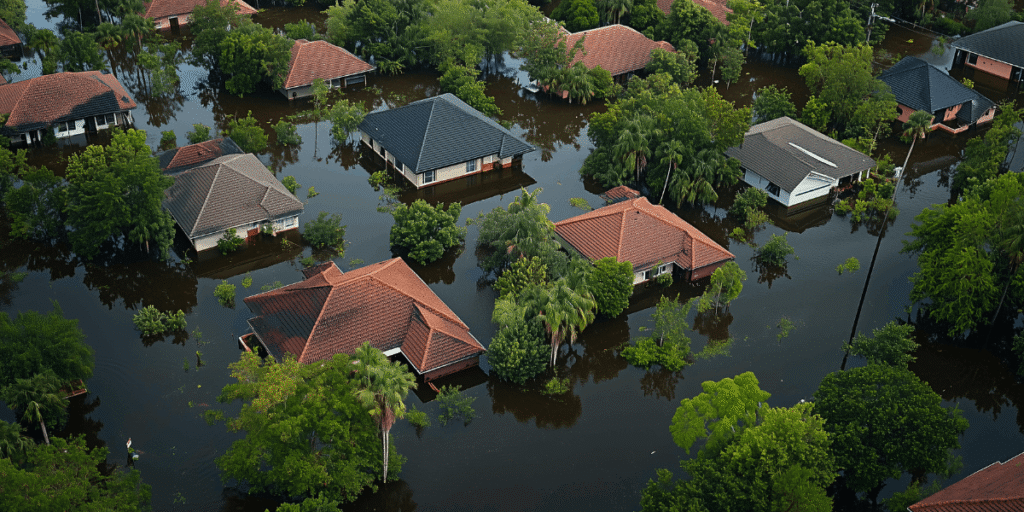
Flood Insurance: The Coverage Many Florida Homeowners Assume They Have
Many Florida homeowners believe that if they have homeowners insurance, they are fully protected against hurricane-related damage.
That assumption can be costly.
A standard homeowners insurance policy may cover certain types of storm damage, such as wind-related damage, depending on the policy. However, it generally does not cover flood damage. The National Flood Insurance Program explains this clearly: most homeowners, renters, and business insurance policies do not cover flood damage, and only a flood insurance policy helps homeowners recover after a flood (National Flood Insurance Program, n.d.-a).
At The Beacon Insurance Agency, this is one of the most important conversations we encourage homeowners to have before hurricane season becomes active. The question is not only whether you have home insurance. The question is whether your policy protects you against the specific risks your home may face.
Flood damage vs. water damage
One of the biggest sources of confusion is the difference between flood damage and other types of water damage.
Flood insurance is designed to cover losses directly caused by flooding. FEMA’s FloodSmart defines flooding as excess water on land that is normally dry, affecting two or more acres of land or two or more properties (National Flood Insurance Program, n.d.-b).
That is different from certain internal water problems, such as a sudden pipe burst or an appliance leak, which may be treated differently under a homeowners policy depending on the policy language.
This distinction matters because the cause of the water damage often determines whether the claim is handled under homeowners insurance, flood insurance, or not covered at all.
For Florida homeowners, especially during hurricane season, this difference is essential. Wind-driven rain, storm surge, overflowing canals, heavy rainfall, and rising water may be treated differently depending on the source of damage and the policy in place.
The myth: “I am not in a high-risk flood zone, so I do not need flood insurance”
Many homeowners assume flood insurance is only necessary if their lender requires it.
That is another risky assumption.
FloodSmart explains that flooding can happen anywhere and that no home is completely safe from a flood event. It also notes that almost one-third of NFIP flood insurance claims come from outside high-risk flood areas (National Flood Insurance Program, n.d.-b).
This is especially important in Florida, where heavy rain, poor drainage, tropical storms, and rapid development can create flood conditions even outside areas commonly perceived as high risk.
Being outside a high-risk flood zone may reduce the probability of flooding, but it does not eliminate the risk.
What flood insurance can cover
Through the NFIP, flood insurance may include two main types of protection: building coverage and contents coverage.
Building coverage generally protects the home’s structure and certain systems. Contents coverage helps protect personal belongings and appliances, depending on the policy terms and limits (National Flood Insurance Program, n.d.-c).
This distinction is important because homeowners sometimes assume that buying flood insurance automatically protects everything inside and outside the home. In reality, coverage has limits, exclusions, and categories that should be reviewed carefully.
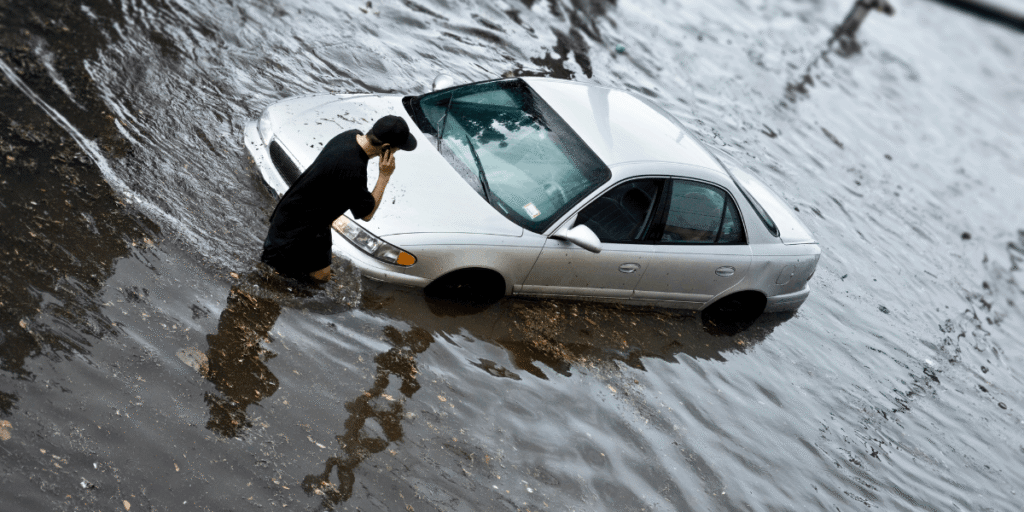
For example, FloodSmart explains that certain items and expenses are not covered by NFIP flood insurance, including cars, currency, property outside the insured building such as decks and fences, and some personal property kept in basements (National Flood Insurance Program, n.d.-d).
Understanding those limits before a flood happens is much better than discovering them during a claim.
Timing matters: flood insurance usually cannot be bought at the last minute
Another common mistake is waiting until a storm is on the radar.
NFIP flood insurance generally has a 30-day waiting period before coverage takes effect, with limited exceptions such as certain mortgage transactions or specific map-related situations (National Flood Insurance Program, n.d.-e).
This means that if a homeowner waits until a storm is approaching, it may already be too late for a new NFIP policy to help with that event.
That is why flood insurance should be reviewed before hurricane season, not during an emergency.
NFIP and private flood insurance options
The National Flood Insurance Program is one of the most recognized sources of flood coverage in the United States, but it is not the only possible option.
FloodSmart explains that NFIP policies are available to homeowners, renters, and businesses in participating communities, and homeowners can purchase coverage for both building and belongings (National Flood Insurance Program, n.d.-d).
In some cases, private flood insurance may also be available. Private policies can differ from NFIP coverage in terms of limits, underwriting, pricing, waiting periods, and flexibility. Because these options vary by property and carrier, homeowners should compare them carefully with a licensed insurance professional.
At The Beacon Insurance Agency, we help clients understand the differences, evaluate available options, and identify whether flood insurance should be part of their overall protection strategy.
A smarter way to think about flood risk
Flood insurance is not just for people who live near the ocean.
It is for homeowners who want to understand and manage a risk that standard homeowners insurance usually does not address.
The most important step is to review your current policy and ask direct questions: Does my homeowners policy exclude flood damage? Do I have separate flood coverage? What are the limits? What is covered under building coverage and contents coverage? Is there a waiting period? Are private options available?
Those questions can make a major difference.
Protection starts with clarity
Flood damage can be financially devastating, especially when a homeowner assumed the coverage already existed.
At The Beacon Insurance Agency, we are always available to help Florida homeowners review their policies, understand coverage gaps, and make informed decisions before storm season brings added pressure.
The right time to understand flood insurance is before the water rises.
References
National Flood Insurance Program. (n.d.-a). Buy a flood insurance policy. FloodSmart.gov.
https://www.floodsmart.gov/whats-covered
National Flood Insurance Program. (n.d.-b). FloodSmart. FloodSmart.gov.
https://www.floodsmart.gov/floodsmart/
National Flood Insurance Program. (n.d.-c). Flood insurance basics. FloodSmart.gov.
https://www.floodsmart.gov/flood-insurance-basics
National Flood Insurance Program. (n.d.-d). What does my policy cover? FloodSmart.gov.
https://www.floodsmart.gov/whats-covered
National Flood Insurance Program. (n.d.-e). Policy terms. FloodSmart.gov.
https://www.floodsmart.gov/policy-terms